
La Nausée: A Reckoning

Updated: Mar 22

You might be tempted to call it a reaction or a response, but those words assume a sequence: stimulus and effect. This precedes sequence. It doesn't follow from anything that came before. It arrives already in place and at work. It feels more primal than causality. More foundational than explanation. Atavistic. Something buried so deep it does not belong to biography, only to inheritance.
Atavistic comes from the Latin atavus, meaning ancestor, though not the immediate kind, the distant one, the great-great lineage that lies outside of narrative. In biology, the term describes the reappearance of traits thought long lost through evolution, such as a vestigial tail, an extra rib, a throwback anatomy breaking through the present tense of the body. Psychologically, it gestures toward impulses that predate reason or language: instinctual, archaic, primeval, pre-moral. It's not remembered, but carried and enacted without language to give it context.
So the body isn't reacting so much as recalling sensations that arrive independent of a narrative or visual aids. As The Body Keeps the Score suggests, the organism stores what the mind cannot metabolize, preserving it beneath language, where it waits for conditions that resemble its origin. What returns, then, is not the past as such, but the pattern of the past.
I wake up daily with a morning sickness gnawing at my body. But this nausea didn’t begin with the presidential election of 2024 or the cascade of egregious events that followed. The election gave it a timestamp, a surface manifestation, a place to land. But the feeling itself predates the moment. It recognized the moment and claimed territory.

For as long as I can remember, I have lived under a kind of gravitational sorrow. It's not sadness or depression, they come and go. This is something heavier and more impersonal; a field, not a feeling. It's a force that stays hidden yet quietly organizes perception. As a child, I sensed it without language. It was associated with a sinking suspicion that the world was already compromised at its foundations, that meaning was flimsier than advertised, even, or especially, at church, and all the adults were pretending not to notice the severity of the horrendous things that confront them daily. Cruelty didn’t require villains so much as permission, endlessly repeated, normalized, and absorbed into the texture of things. Violence as entertainment. What we often herald as love is, in reality, just violence masquerading as love.
I grew up in an atmosphere saturated with named and unnamed grief, less emotional than structural. It entered through tone, posture, ritual. The body learned it before the mind could name it. The church made this especially clear: people weeping and wailing, speaking in tongues, bodies overtaken, while a lugubrious organ held everything in suspension. The suffering was explicit; the meaning was not. They cried during the service and smiled at one another before and after. A choreography of rupture and repair. Joy was conditional, provisional, borrowed. Sorrow was load-bearing.
In The Wild Edge of Sorrow, grief is described not as pathology but as initiation, a threshold experience that reveals the depth of one’s belonging to a broken world. But what happens when that initiation never resolves into integration? When grief is not episodic but ambient? Not an event, but a condition?
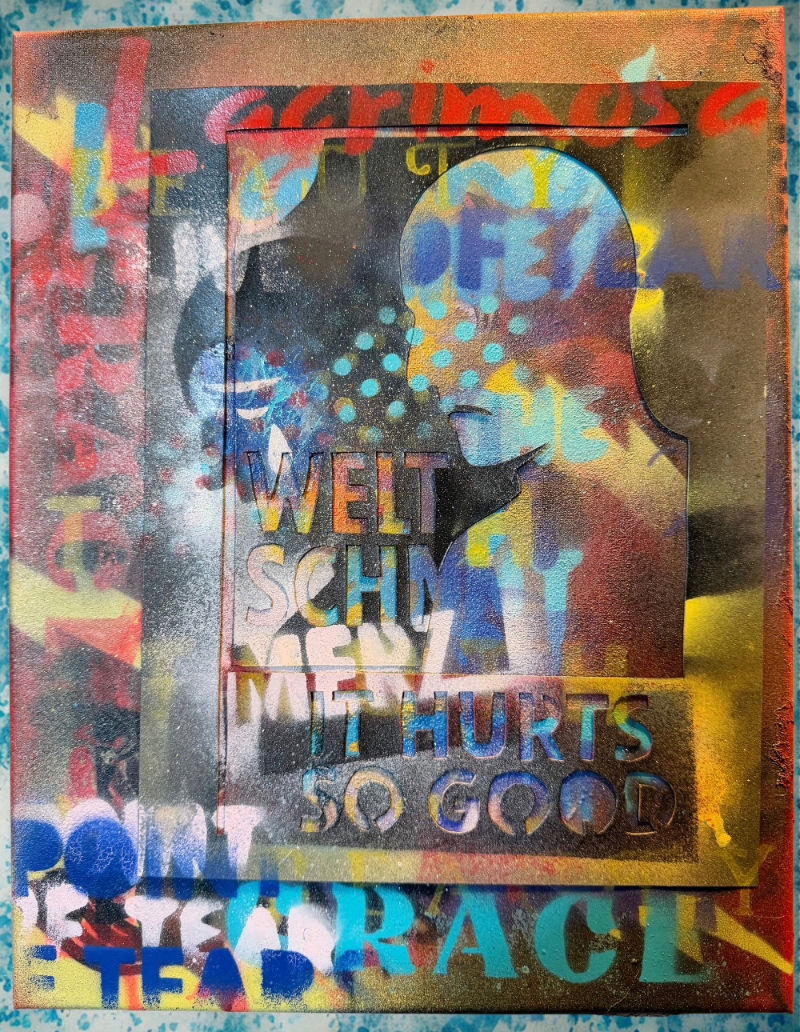
Since the election, that condition has surfaced again as nausea. It's not panic or outrage, it's something that moves slower and heavier. A sinking recognition, as if the ground itself were dissolving. The body registers what the mind still negotiates: that what we call normal now requires sustained participation in unreality, a kind of collective agreement to misperceive.
Two days after the election, I was at the gym, moving weights in that repetitive, mindless way people use the gym to set aside their woes and worries. In my ears, an audiobook spoke calmly about freedom, not as a feeling, but as a discipline. Something practiced. Something fragile. Something requiring memory and refusal. The clarity of it made me physically ill.
Between sets, without drama, without much deliberation, it became obvious to me that the relationship I was in no longer belonged to the world as it was revealing itself. Staying would require distortion, and diminished perception. A willingness to perform coherence where none remained.

So I ended it, awkwardly, through a series of disjointed messages, delivered with the strange relief of someone complying with a verdict already issued elsewhere. And afterward, I regretted it.
What surprised me was the stillness that followed the heartbreak, as if the body had already concluded something the mind had yet to understand. Thought lagged. Language arrived late. Action continued without authorship.
This is close to what Sartre describes in Nausea: the collapse of the familiar world into contingency, where objects lose their assumed meanings and existence reveals itself as excessive, unjustified, almost obscene in its facticity. But here, that nausea is not abstract. It is lived through the body. Not philosophical, but physiological.

There are names readily available for this state, diagnoses, categories, and explanatory frameworks. They compress experience into something manageable, something treatable. I don’t resist them, I simply don’t accept them. Some names function less as descriptions than as defenses, insulating the speaker from what the experience would otherwise expose.
This is not fixation or hysteria. It's not an overidentification with an event or a figure. It is a recognition of the return of sorrow. The body encounters, again, the repetition of cruelty and the instability of meaning. The ease with which language, power, and authority empty themselves of meaning and how quickly they demand our participation in a sickening charade.

Nausea interrupts the performance of normalcy that denies the truth of what has been revealed. It refuses resolution. It does not heal. It does not offer cure or catharsis. It registers a condition. It clarifies. They are not symptoms to be managed but perceptions to be endured. When the world drops its disguises too suddenly, the body is often the first to know, and the last to lie. I let it stand. I don’t try to cure it. It's a bodily judgment, and a form of knowledge.
People say it will pass in the same way they speak of the ephemerality of the weather. But the weather is not neutral. It reshapes the land. It settles into soil, fossil and bones. It redraws the horizon by degrees and leaves behind evidence that cannot be argued away, or washes away or flatens all evidence of an erstwhile thriving civilization.
If this nausea lifts, it will not return me to what I was. It will leave behind something sharper: the recognition that all of this is not new. I have stood in this atmosphere before. And what feels like an event is, in fact, a climate. Quel beau temps!
And that the body remembers what the mind still struggles to admit.


Comments