
Ducks and Trucks: On Impermanence Most Foul
- Clinton Wilson
- May 8
- 3 min read

Edna Street, Boise
About three years ago, on Edna Street, I learned something I didn't want to learn.

There was a stretch of that road where I always slowed down. Not for traffic or cyclists, or pedestrians with baby strollers, but for the possibility of catching a glance at the couple. A pair of ducks that moved through the neighborhood with the quiet authority of standoffish neighbors. I had seen them enough times to feel certain they were the same two, and I wasn't wrong to think so. Ducks form genuine bonds. They keep best friends, specific companions they seek out and stay close to, individuals recognized across time. They see the world in full color, richer than we do, in fact, with a spectrum that includes ultraviolet light we can't perceive. They had flown into my back yard once, landed with the awkward, sheepish uncertainty of out-of-place tourists. They didn't stay long.
That morning I was behind a large truck, the kind that takes up more space than it needs to. A truck with a fat ass. As we approached the stretch, I eased off the gas, leaning forward slightly, as if that would help me see better. The truck in front accelerated.
And then I saw one of them.
It stood in the road, not fleeing, not even turning, just staring forward with a strange, vacant stillness. Not fear. Not yet. Something earlier than that. A pause in the machinery.
The truck didn't slow.
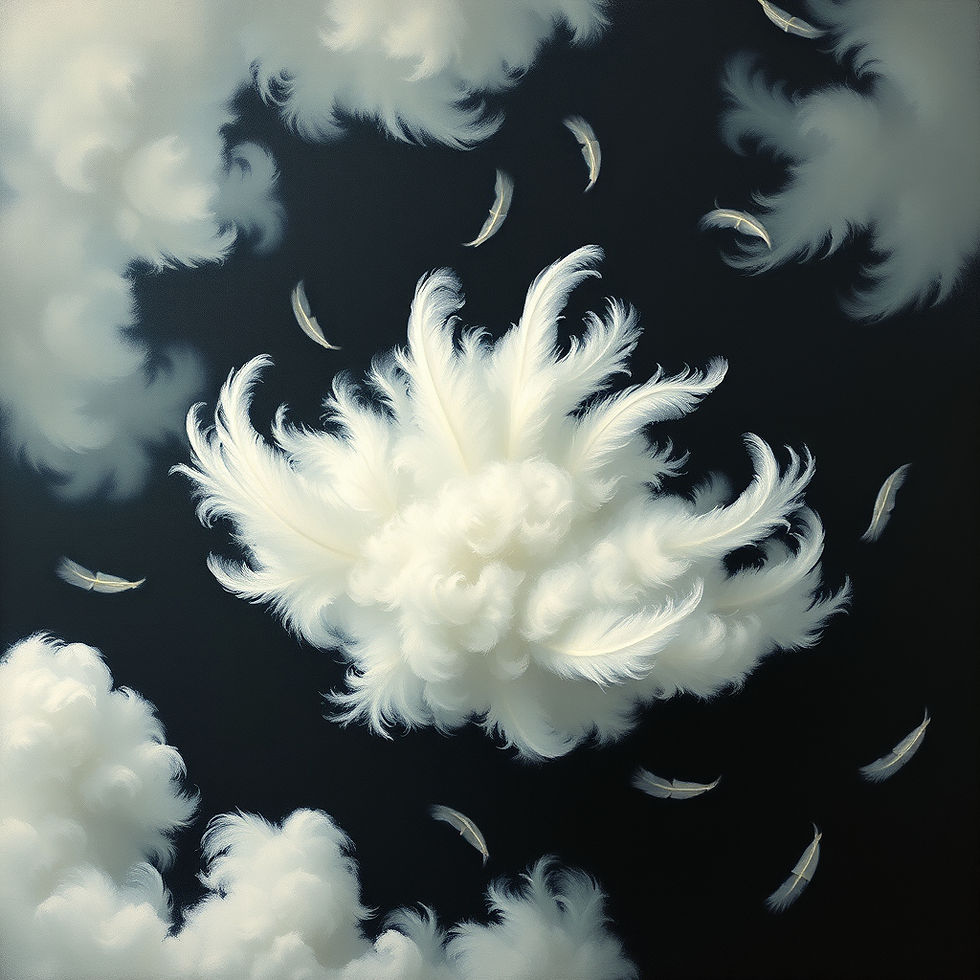
There was no sound I can remember. Just the sudden, quiet bloom of feathers, drifting and settling, as if the moment itself had been ruptured and was now falling gently back into place.
The truck kept going.
I drove past what remained, though I couldn't say what that was. The street resumed its function. Houses, sidewalks, the ordinary rhythm of a neighborhood reasserting itself. But something had slipped out of alignment. Not out there. Here.
I have since learned more about ducks than I probably should have. It is not entirely comforting knowledge. The males possess reproductive anatomy that is, by any measure, alarming: long, corkscrew-shaped, capable of coercion. Biologists who study waterfowl describe mating behaviors that are difficult to characterize as anything other than violent. The females have evolved an equally baroque internal anatomy in response: spiral passages that resist, redirect, dead ends that give them some measure of control. It is an evolutionary arms race embedded in the bodies of creatures I had always regarded as charming.
Nature is not a refuge from the difficult facts. It is the difficult facts.
And they sleep with one eye open. Not as metaphor but as mechanism: one hemisphere of the brain resting while the other stays alert, one eye watching. Vigilance that never fully releases. A life held in partial wakefulness.
I had believed, without ever saying it aloud, that noticing something granted it a kind of protection. That recognition, attention, even affection, might bend the world, just slightly, toward mercy.
It doesn't.
The world does not negotiate with what we love. It contains creatures of startling complexity, animals that recognize companions, that see colors invisible to us, that sleep with one eye trained on the dark, and it kills them with trucks, without ceremony, without the faintest adjustment to their worth.
But we do negotiate. We assign meaning anyway. We slow down. We look. We remember. Not because it changes what happens, but because it changes what remains. It's a small encounter with what Schopenhauer might call the blind will — the indifferent force of life grinding forward without regard for individual forms. And yet, against that, there is this other faculty: attention. The act of seeing not as control, but as witness. You cannot save what you love from the world.
But you can refuse to let it pass through the world unseen.
And somewhere, I have to believe, the other one kept going. One eye open. Looking for what it had lost.


Tragic and beautiful, a representation of life as we know it.